DEVELOPING TRAINING SKILLS IN HOTELS – 3 ESSENTIAL INSIGHTS EVERY TRAINER SHOULD KNOW
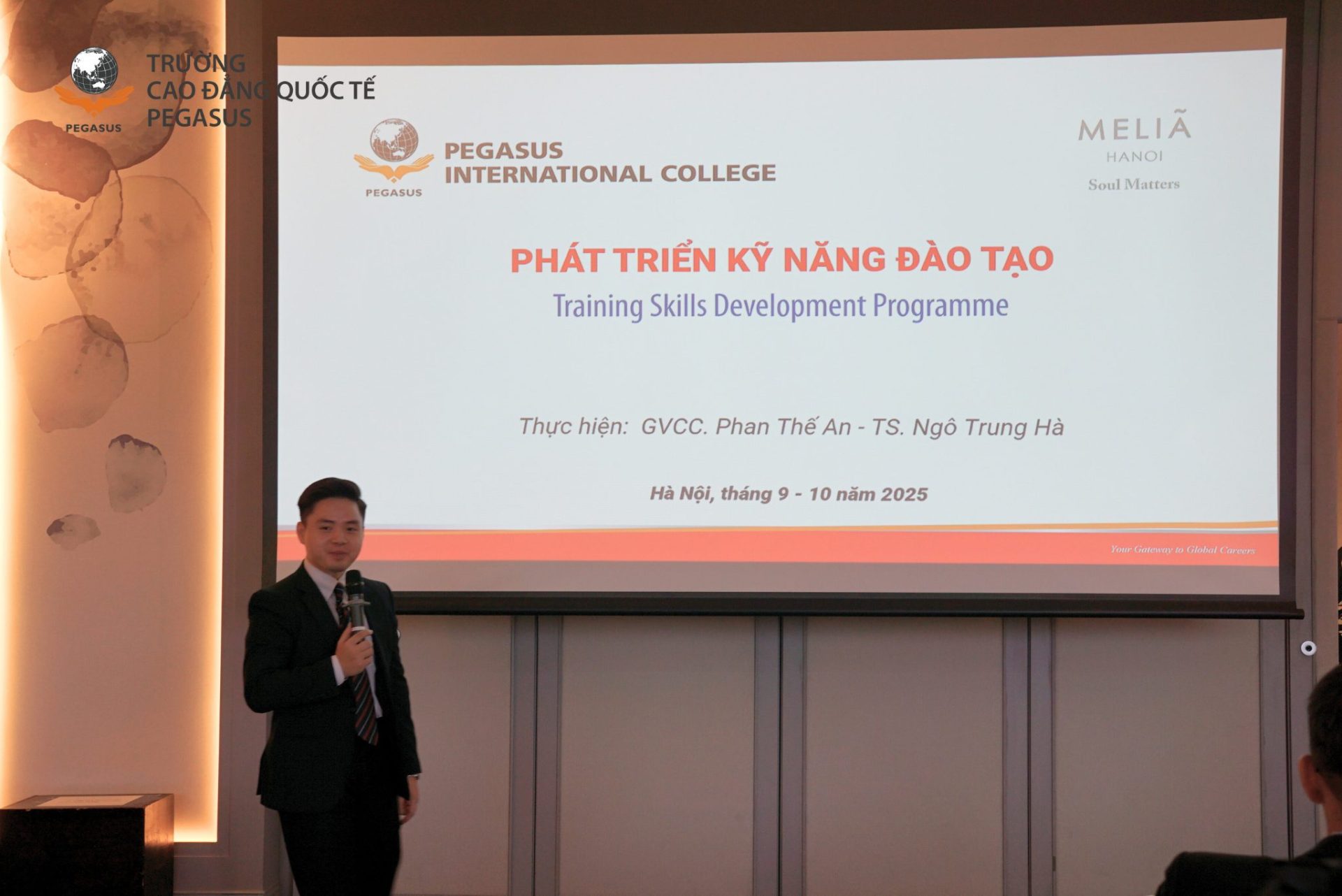
A customised “Training Skills Development” Programme designed to strengthen Melia Hanoi Hotel’s leadership competencies designing, delivering and sustaining high-impact internal training sessions.
Internal Training – The Foundation of a Strong Hotel Workforce
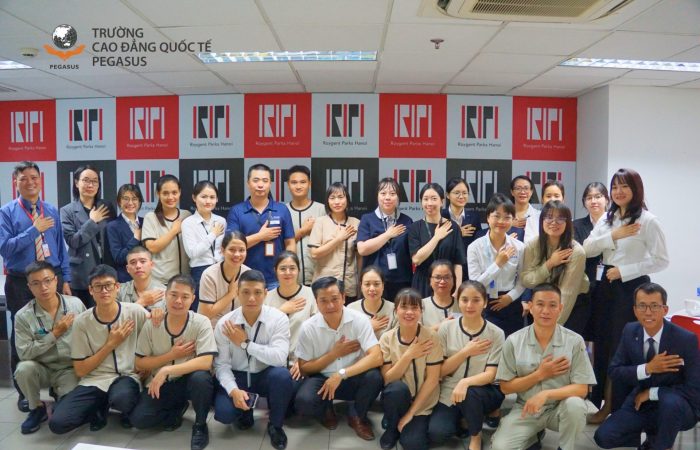
In the hospitality industry, regular practice and hands-on experience are essential to maintaining service excellence. Beyond operational management, supervisors and managers also play the role of internal trainers – guiding, coaching and developing their teams for work efficiencies and to maintain high service quality standards.Understanding this dual responsibility, the Hanoi Campus of Pegasus International College developed the “Training Skills Development” Programme exclusively for Melia Hanoi Hotel’s leadership team. The course equipped participants with both theoretical frameworks and practical tools to design and deliver training sessions tailored to their department’s needs.
Two Training Strategies – Knowledge and Skills Development
Our programme content was structured around two essential forms of training:
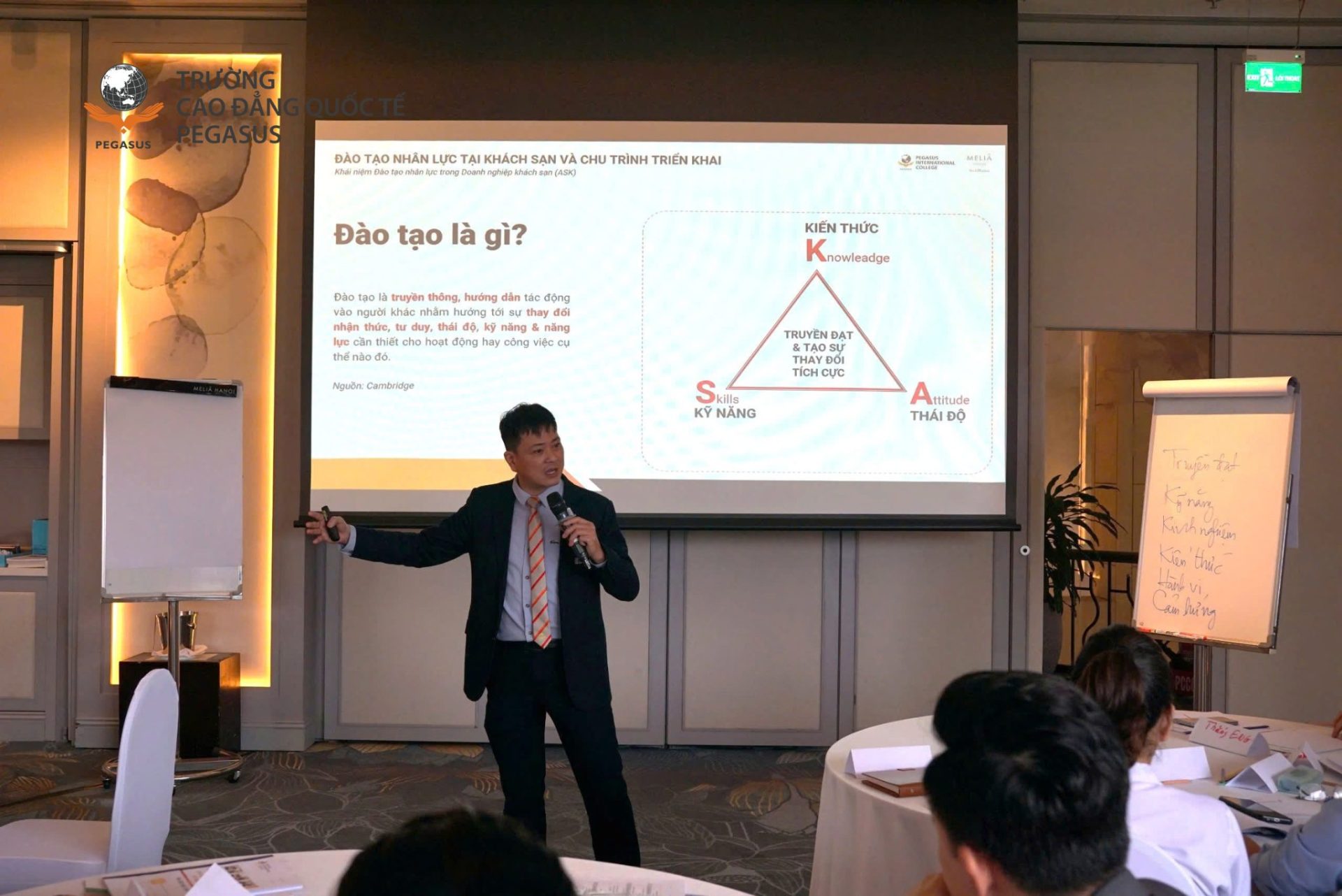
- Knowledge-Based Training – helping staff understand standard operating procedures (SOP), industry standards (VTOS), and the “why” behind each service action.
- Skills-Based Training – focusing on hands-on techniques, professional reflexes, and situational problem-solving in real work scenarios.
By combining these two strategies, participants learned how to transform theory into practice — ensuring staff not only know what to do but also proactively apply it to their work.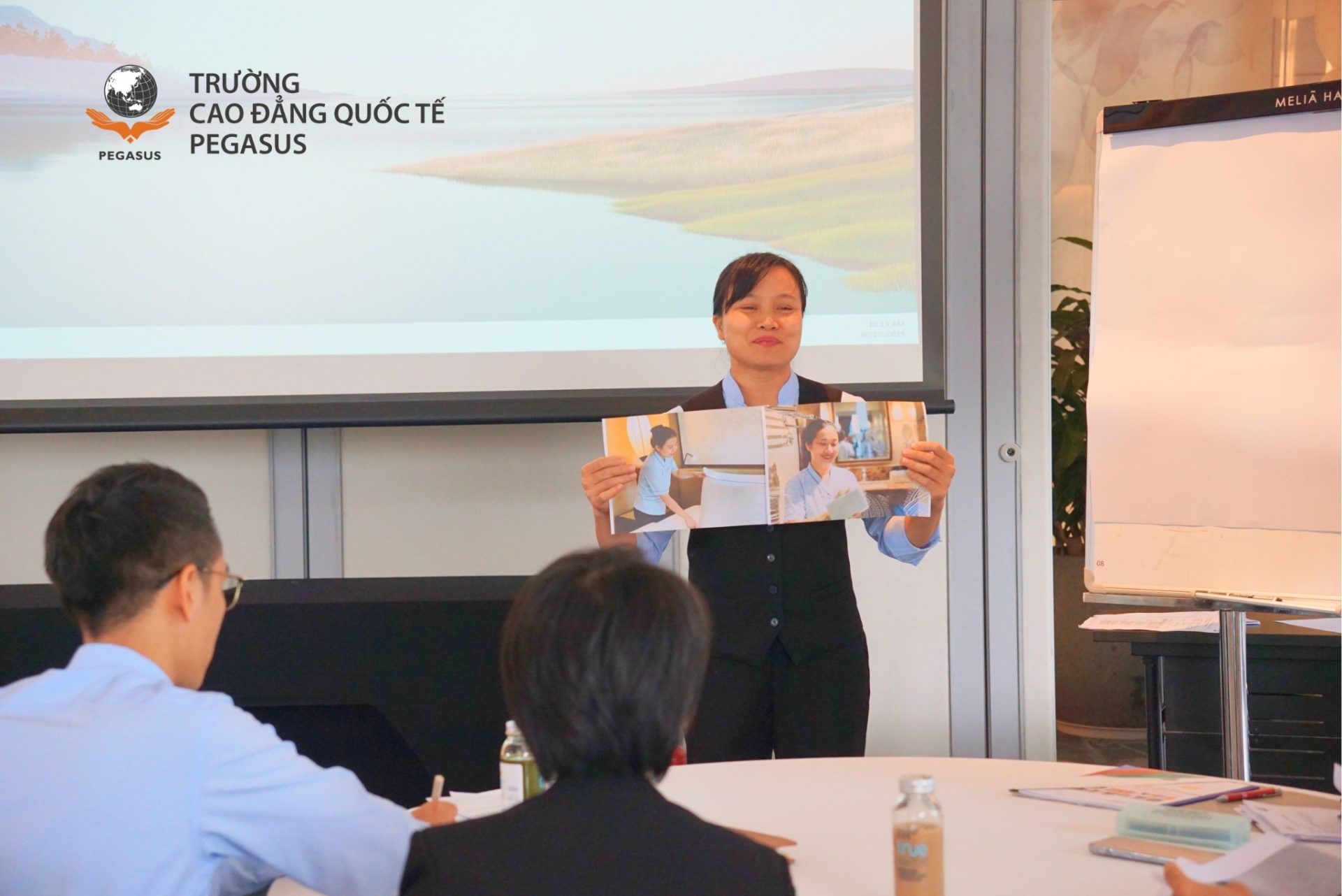
Building Effective Training Content – Three Key Steps
To enhance clarity, focus, and consistency in internal training, Pegasus Instructors guided Melia Hanoi’s Managers team through a three-step framework for developing effective training content:
- Step 1 – Define Learning Priorities – Must/Shall/Can
Identify the essential knowledge employees must master (Must), the additional content that enhances service quality (Shall) and the optional elements that promote innovation or differentiation (Can).
- Step 2 – Apply SOP and VTOS Standards
These standards serve as a foundation for designing detailed, accurate lesson content. By aligning training materials with hotel SOPs and VTOS, trainers can pinpoint exactly what to teach for each job position, ensuring staff understand and perform tasks correctly and consistently.
- Step 3 – Structure the Lesson for Clarity and Impact
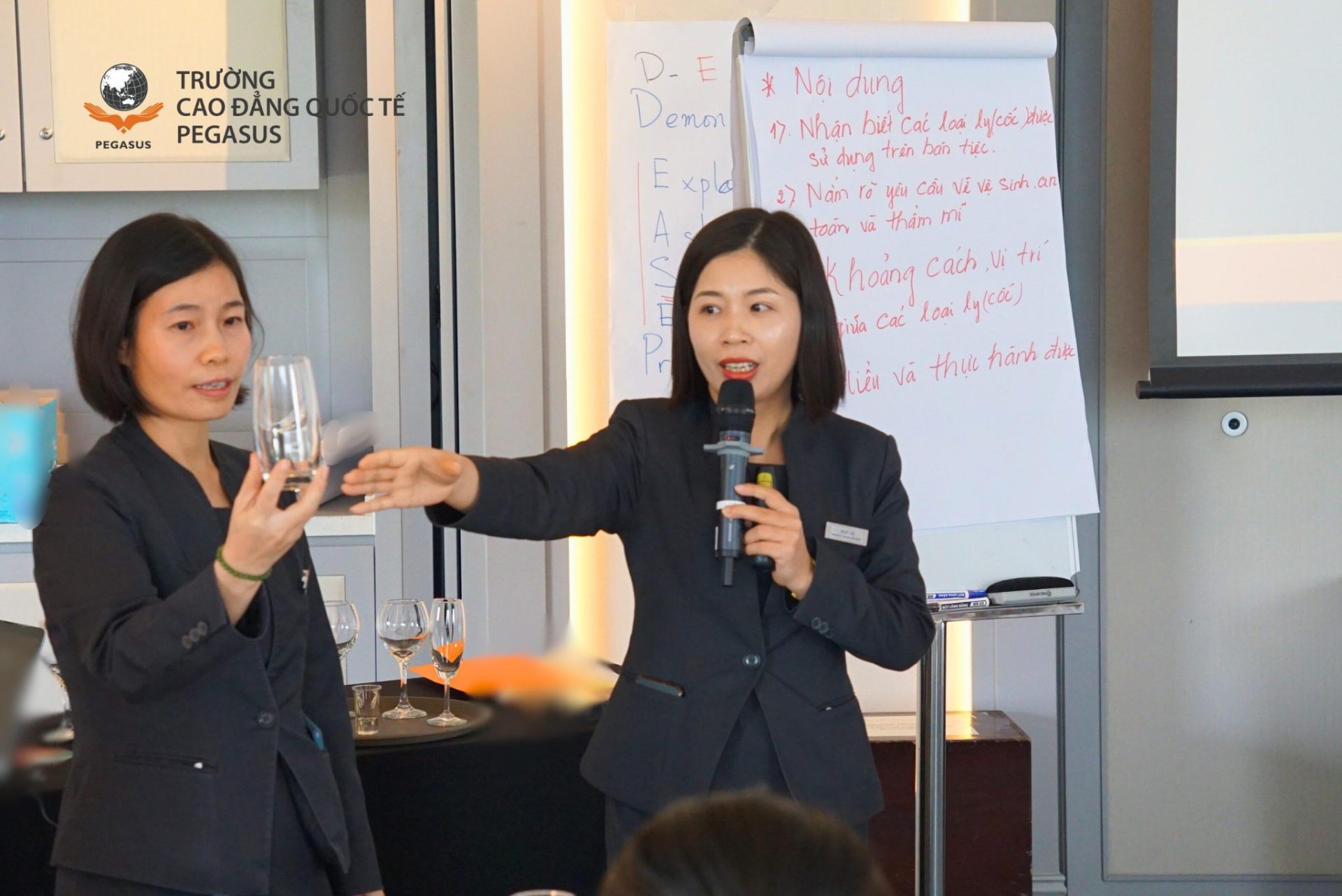
Participants learned to apply structured delivery models such as I.N.T.R.O (for introduction), D.E.A.S.E.P (for development), and O.F.F (for conclusion), which help to design sessions that capture attention, promote active learning, and reinforce key points effectively.
Practice – The Key to Confidence in Training
The highlight of the programme was hands-on application. Participants not only learned training models but also designed and presented their own lesson plans, receiving feedback from Pegasus Instructors. Through this process, each manager developed greater confidence, stronger communication skills and the ability to lead professional internal training sessions within their departments.
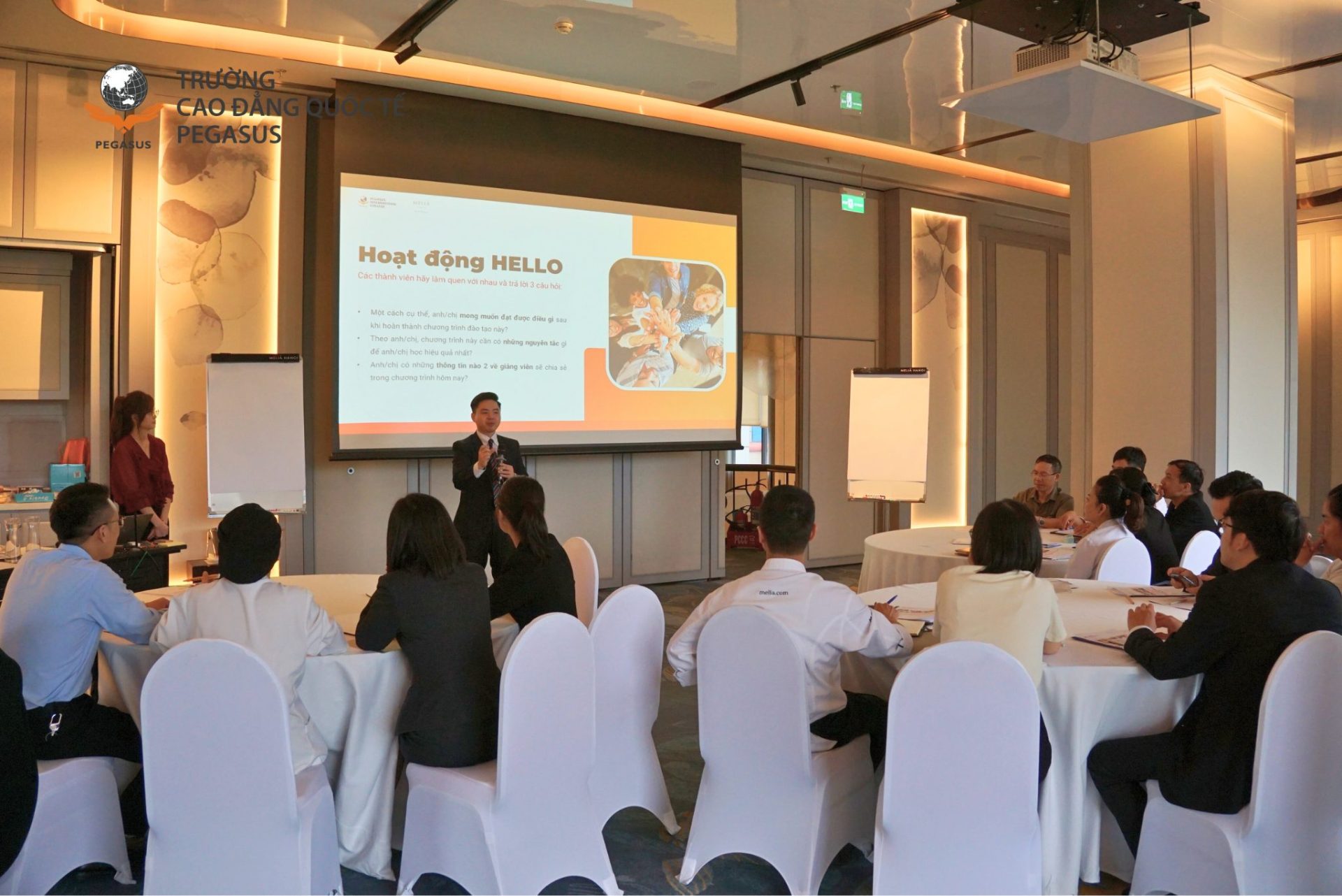 The programme provided practical and lasting value, empowering Melia Hanoi’s managers, supervisors and department heads to become more confident trainers while enhancing the overall quality of the hotel’s workforce.